Jupiter
The giant of the solar system, wrapped in storms and bands of gas.
Jupiter is the largest planet, with powerful storms, a huge magnetic field and a complex system of moons that feel like worlds of their own.
Jupiter's missions read like a tour through a planetary system: storm physics, radiation belts, rings and ocean-bearing moons all orbit one giant gravity well.
- Orbit
- 11.9 Earth years
- Scale
- 11x Earth radius
- Solar distance
- 5.2 AU
- Mission records
- 4 featured
Telemetry
Planet profile
Instrument readouts calibrated against the solar system reference frame.
- Order
- #5
- Channels
- 06
- Sources
- 01
- RadiusRAD-01
- 69.9K km
- 69,911 km
- Distance from SunHEL-02
- 778.5M km
- 5.2x Earth's orbit in the map scale
- Orbital periodORB-03
- 11.9 Earth years
- 4,333 Earth days
- Day lengthROT-04
- 9.9 hours
- 9.9 hours
- MoonsSAT-05
- 95 known moons
- Confirmed natural satellites
- GravityGRV-06
- 24.8 m/s^2
- Surface or cloud-top gravity
Authored fact sources
Atlas media frame
Polar auroras over a giant system
A reserved frame for Juno cloud mosaics, aurora maps and Galilean moon flyby reels.
Profile Plate / Atlas Editorial
Media gallery
Curated visual storyboard
Planet-specific frames pair approved imagery with orbital views, science overlays and mission-ready close passes for the generated asset layer.
2026-06-12
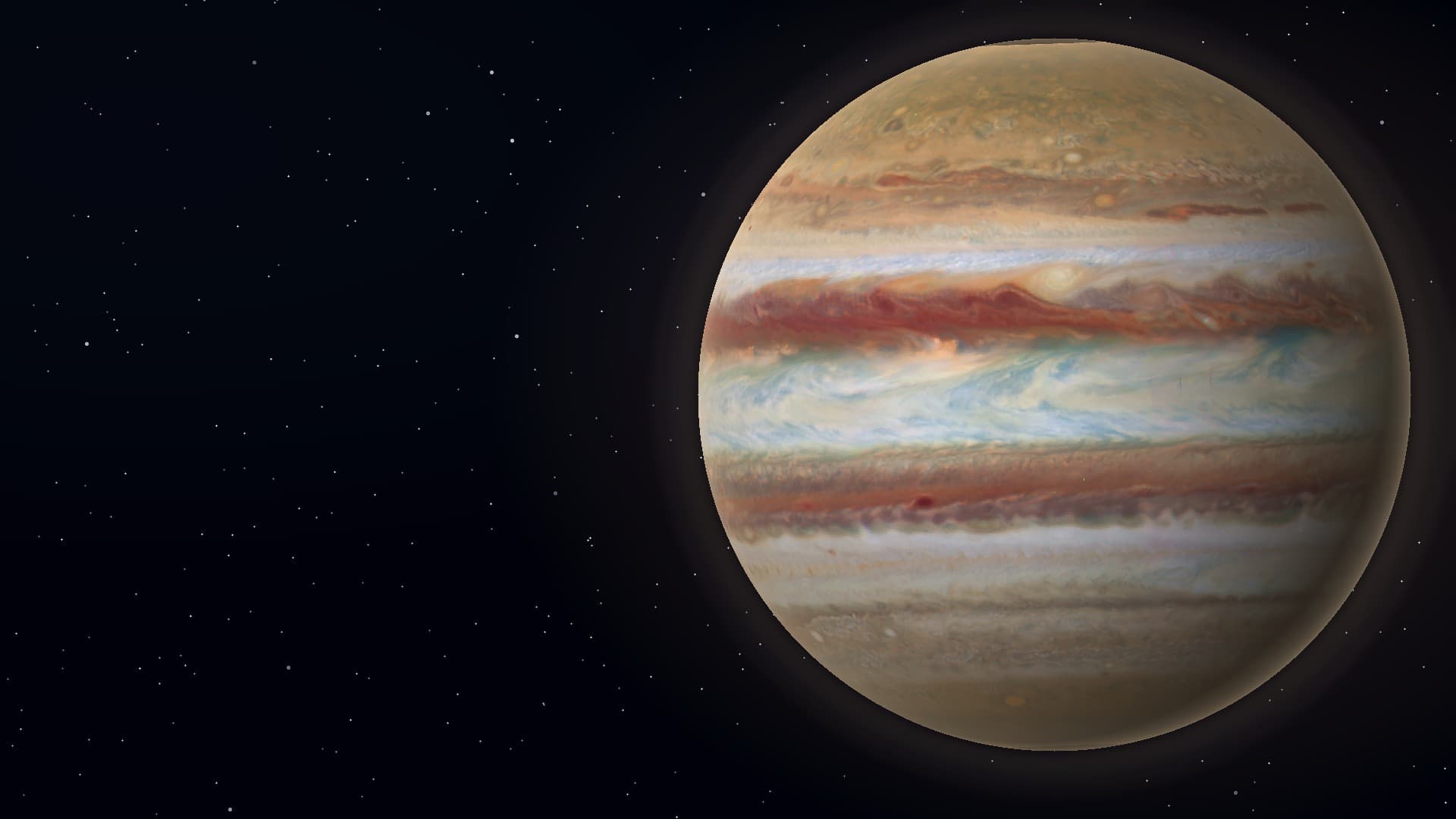
Cloud atlas
Belt And Zone Weather Engine
Banding, storms and deep convection get a high-contrast cinematic plate.
Approved generated asset seed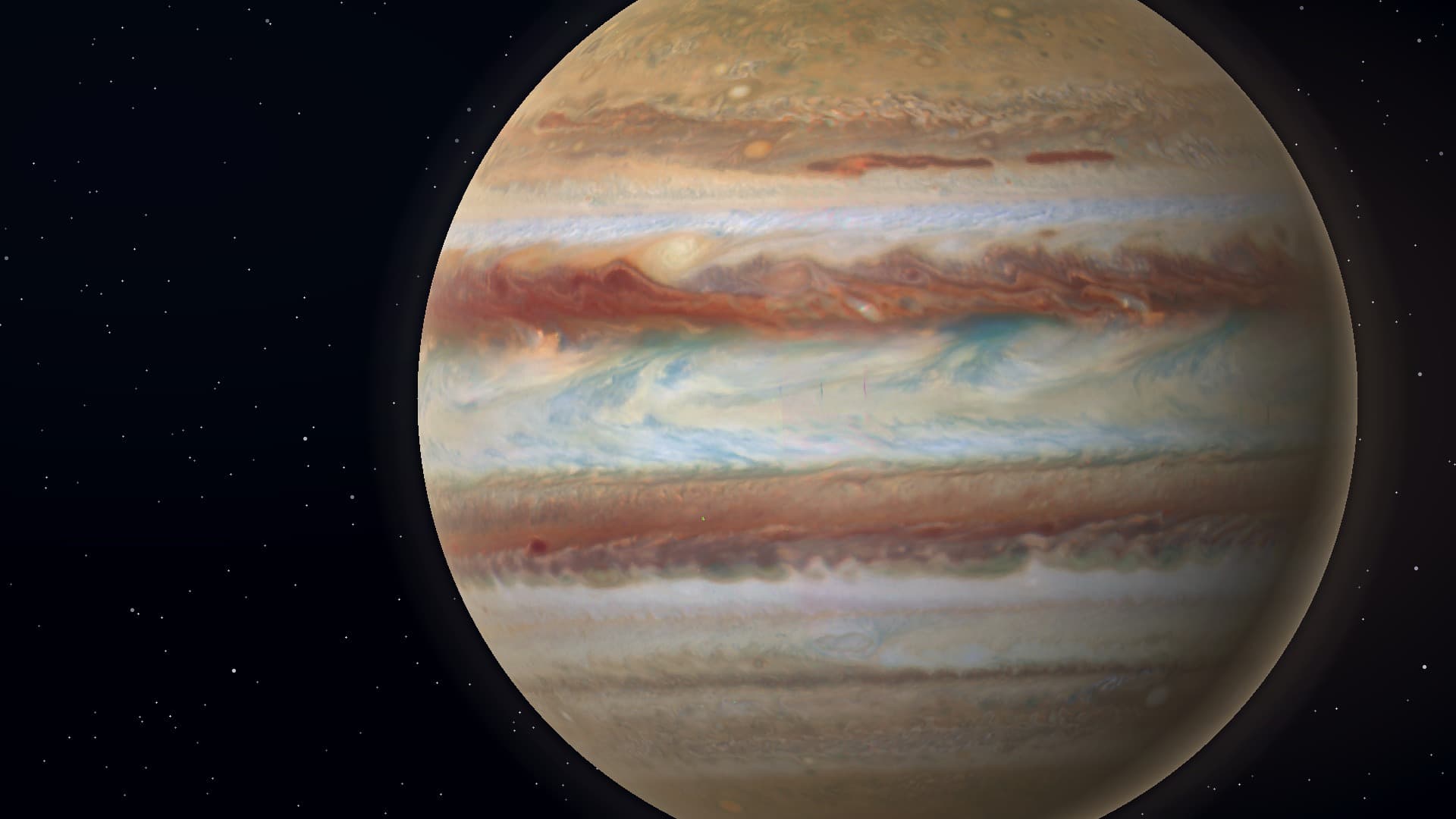
Storm focus
Great Red Spot Pass
A close atmospheric flyby reserved for vortex structure and scale cues.
Approved generated asset seedSystem map
Galilean Moon Corridor
Io, Europa, Ganymede and Callisto connect Jupiter to ocean-world exploration.
Approved local textureSource families
Editorial anchors for the frame-level source links above.
Studio output
Generated asset vault
Completed Higgsfield generations for Jupiter now flow back into the planet profile as reusable stills, motion plates and prompt-ready campaign records.
Scale / orbit
Earth reference instruments
Radius, gravity, rotation, and heliocentric placement resolved against Earth and the outer-system range.
Radius comparator
11x Earth radius
Earth
1x radius
Jupiter
11.0x radius
- Reference
- Earth radius
- Scale reading
- 11.0x
- Surface gravity
- 24.8 m/s^2
Orbital placement
5.2 AU from the Sun
- Distance
- 778.5M km
- Solar order
- #5
- AU ratio
- 5.20 AU
Gravity
24.8 m/s^2
Day length
9.9 hours
Atmosphere
Composition and environmental character
Jupiter has no solid surface; its visible atmosphere is a layered hydrogen-helium weather engine with ammonia clouds and long-lived storms.
- Pressure
- No true surface
- Weather
- Belts, zones, lightning and enormous vortices
Environmental shell
Pressure, weather and shielding layers
Jupiter has no solid surface; its visible atmosphere is a layered hydrogen-helium weather engine with ammonia clouds and long-lived storms.
Ammonia cloud deck
Bright zones and dark belts
Fast alternating jet streams organize the banded appearance.
Water storm layer
Deep convective lightning
Water clouds below the visible layer may power huge thunderstorms.
Metallic hydrogen interior
Extreme pressure dynamo
Conductive hydrogen helps drive the strongest planetary magnetic field.
Satellite system
Moons, rings and nearby targets
Jupiter's moon system is a solar system in miniature, with volcanism, ice shells, oceans and captured irregular satellites.
95 confirmed natural satellites in the shared dataset
Jupiter carries 95 known natural satellites in the core atlas dataset.
Io
Volcanic moon
Tidal heating makes Io the most volcanically active known world.
Europa
Ice shell ocean world
A global ocean beneath ice makes Europa a flagship astrobiology target.
Ganymede
Largest moon
Bigger than Mercury and the only moon known to have its own magnetic field.
Callisto
Ancient cratered moon
Its old surface records heavy bombardment across the outer system.
Science priorities
Why Jupiter matters
The atlas treats every world as a live research case: geology, climate, interior structure and mission strategy are wired into the profile.
3 focus areas
Interior map
Gravity harmonics from Juno
Jupiter's diluted core and deep jets constrain how gas giants assemble.
Great Red Spot
Centuries-old storm
The storm is a natural laboratory for vortex physics at giant scale.
Ocean moons
Europa and Ganymede targets
Icy satellites expand the search for habitable environments beyond Mars.
Missions
Jupiter mission dossier
Jupiter's missions read like a tour through a planetary system: storm physics, radiation belts, rings and ocean-bearing moons all orbit one giant gravity well.
Featured stack
4 dated records connect this planet profile to exploration, observation and archival source links.
1973-1974
highlightedPioneer 10 and 11
NASA / First flybys
Measured the radiation environment and opened the outer planet route.
NASA Pioneer 101979
Voyager 1 and 2
NASA / Grand Tour flybys
Revealed rings, lightning, volcanic Io and complex Galilean moons.
NASA Voyager fact sheet1995-2003
highlightedGalileo
NASA / First Jupiter orbiter
Dropped an atmospheric probe and studied the moons through repeated encounters.
NASA Galileo2016 onward
highlightedJuno
NASA / Polar gravity and magnetism
Maps the deep atmosphere, auroras and interior structure from looping polar orbits.
NASA Juno