Uranus
An icy blue giant tilted dramatically onto its side.
Uranus is an ice giant with methane-rich clouds, faint rings and a unique sideways rotation that creates extreme seasons.
Uranus remains the great under-sampled ice giant: one fast flyby, decades of telescopic monitoring and a strong case for a dedicated orbiter.
- Orbit
- 84 Earth years
- Scale
- 4x Earth radius
- Solar distance
- 19.2 AU
- Mission records
- 4 featured
Telemetry
Planet profile
Instrument readouts calibrated against the solar system reference frame.
- Order
- #7
- Channels
- 06
- Sources
- 01
- RadiusRAD-01
- 25.4K km
- 25,362 km
- Distance from SunHEL-02
- 2.9B km
- 19.2x Earth's orbit in the map scale
- Orbital periodORB-03
- 84 Earth years
- 30,687 Earth days
- Day lengthROT-04
- 17.2 hours
- 17.2 hours
- MoonsSAT-05
- 27 known moons
- Confirmed natural satellites
- GravityGRV-06
- 8.7 m/s^2
- Surface or cloud-top gravity
Authored fact sources
Atlas media frame
A sideways dawn on an ice giant
A reserved frame for ring arcs, methane cloud tracking and a future orbiter arrival sequence.
Profile Plate / Atlas Editorial
Media gallery
Curated visual storyboard
Planet-specific frames pair approved imagery with orbital views, science overlays and mission-ready close passes for the generated asset layer.
2026-06-12
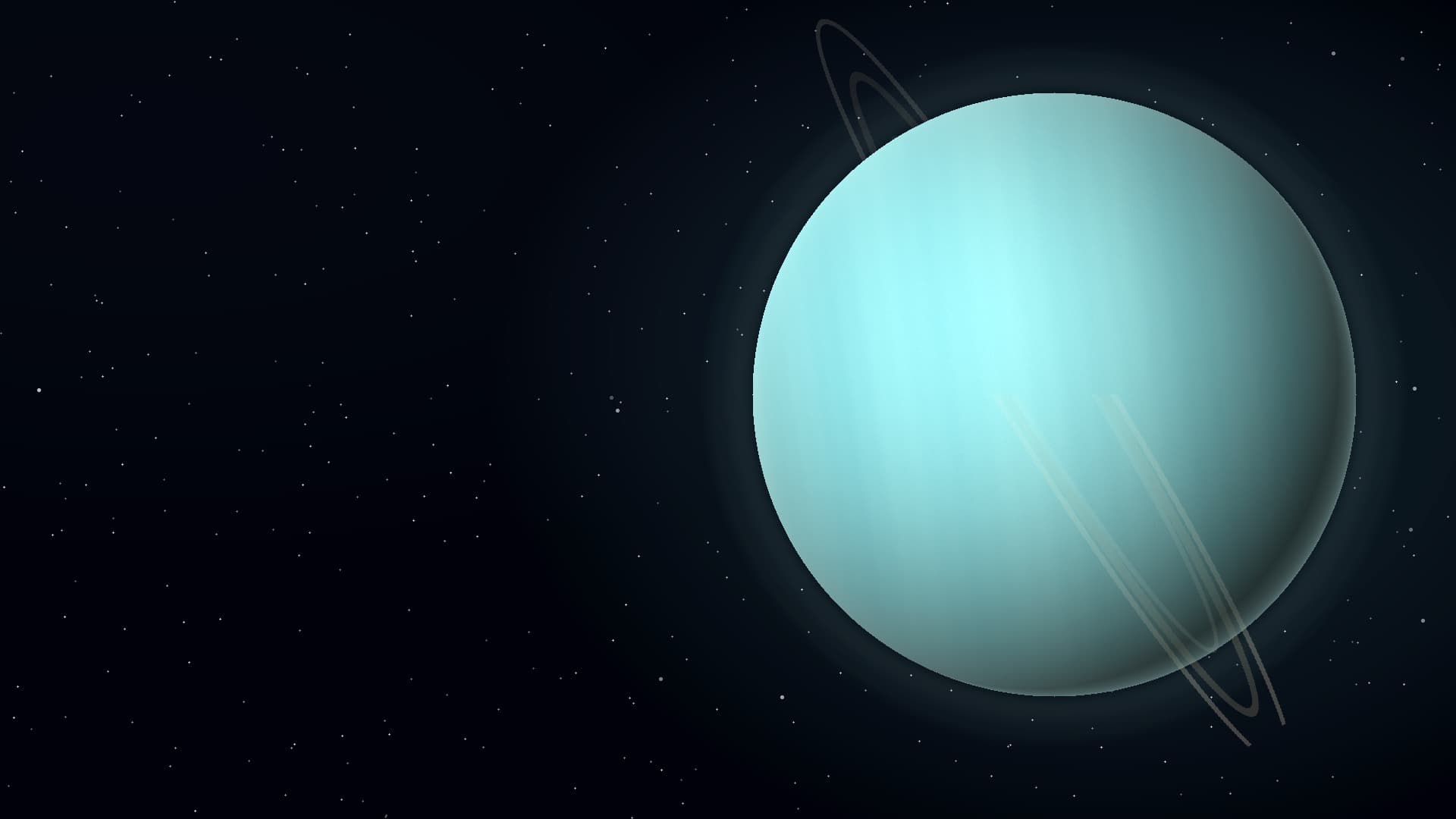
Ice giant context
Sideways Season Geometry
Axial tilt and faint rings drive a composition unlike the other giant planets.
Approved generated asset seed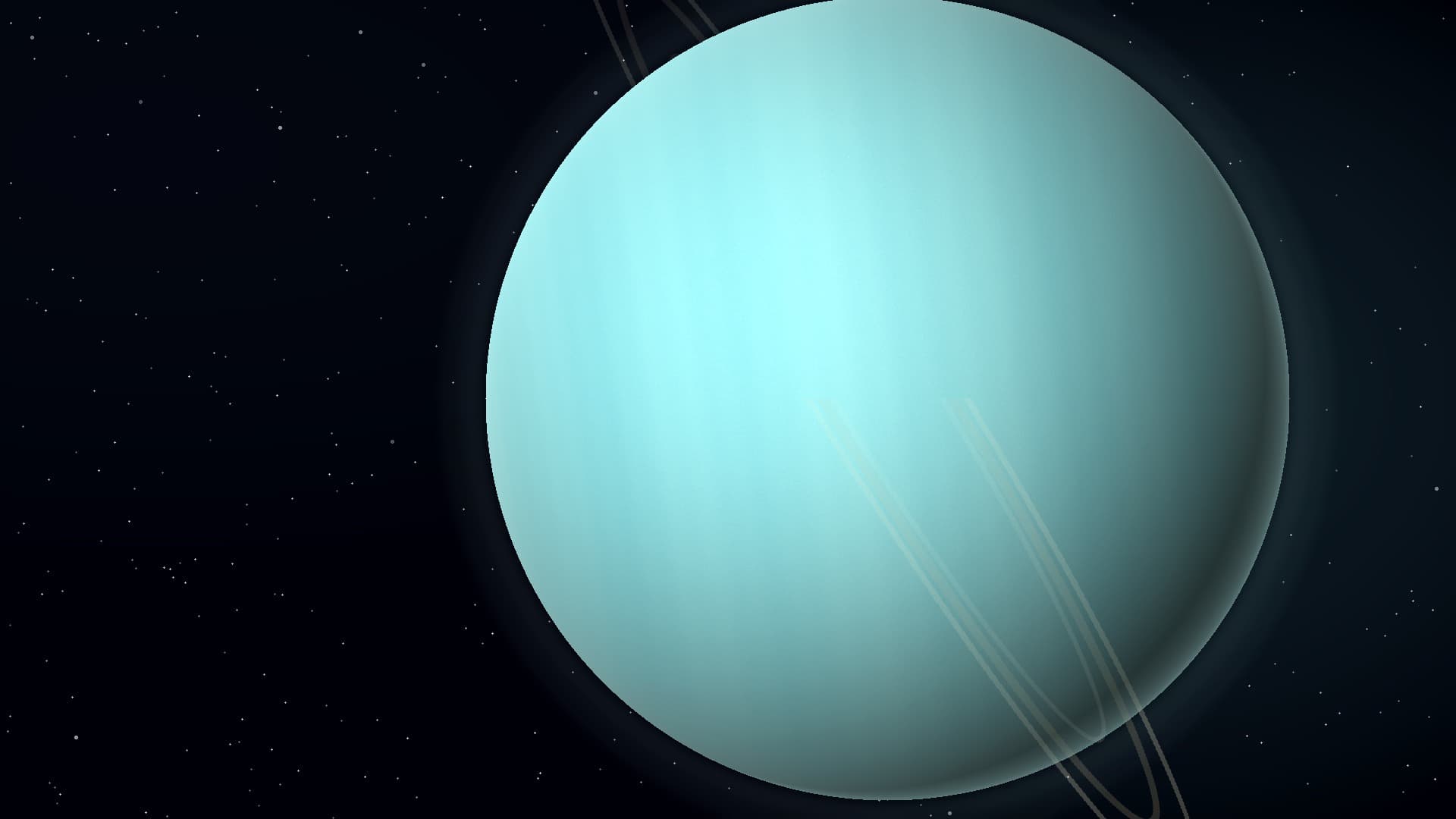
Moon target
Miranda Terrain Study
A future orbiter campaign frame for cliffs, grooves and disrupted icy geology.
Approved generated asset seedAtmosphere plate
Methane Cloud Watch
Subtle storms and methane absorption keep the visual language quiet and cold.
Approved local textureSource families
Editorial anchors for the frame-level source links above.
Studio output
Generated asset vault
Completed Higgsfield generations for Uranus now flow back into the planet profile as reusable stills, motion plates and prompt-ready campaign records.
Scale / orbit
Earth reference instruments
Radius, gravity, rotation, and heliocentric placement resolved against Earth and the outer-system range.
Radius comparator
4x Earth radius
Earth
1x radius
Uranus
3.98x radius
- Reference
- Earth radius
- Scale reading
- 3.98x
- Surface gravity
- 8.7 m/s^2
Orbital placement
19.2 AU from the Sun
- Distance
- 2.9B km
- Solar order
- #7
- AU ratio
- 19.20 AU
Gravity
8.7 m/s^2
Day length
17.2 hours
Atmosphere
Composition and environmental character
Uranus has a hydrogen-helium atmosphere tinted by methane, with low internal heat and long seasons caused by its sideways rotation.
- Pressure
- No true surface
- Weather
- Methane clouds, seasonal storms and cold upper atmosphere
Environmental shell
Pressure, weather and shielding layers
Uranus has a hydrogen-helium atmosphere tinted by methane, with low internal heat and long seasons caused by its sideways rotation.
Methane haze
Blue-green absorption
Methane absorbs red light, giving Uranus its cyan color.
Ice giant envelope
Water, ammonia and methane ices below
The deep interior is richer in heavy molecules than gas giants.
Tilted magnetosphere
Offset magnetic field
The magnetic axis is strongly tilted and displaced from the planet center.
Satellite system
Moons, rings and nearby targets
Uranus has a compact system of dark icy moons named for Shakespeare and Pope characters, with Miranda showing the most dramatic terrain.
27 confirmed natural satellites
Uranus carries 27 known natural satellites in the core atlas dataset.
Miranda
Disrupted icy moon
Has cliff faces, grooves and patchwork terrain unlike any other moon.
Ariel
Bright icy moon
Grooved terrain suggests resurfacing by tectonics or cryovolcanism.
Titania
Largest Uranian moon
Canyons and faults hint at expansion and interior evolution.
Science priorities
Why Uranus matters
The atlas treats every world as a live research case: geology, climate, interior structure and mission strategy are wired into the profile.
3 focus areas
Sideways seasons
98 degree axial tilt
Extreme tilt creates decades-long sunlight patterns across poles and equator.
Missing heat
Very low internal flux
Unlike Neptune, Uranus radiates little extra heat, challenging interior models.
Ice giant benchmark
Common exoplanet size class
Understanding Uranus helps interpret many Neptune-size worlds around other stars.
Missions
Uranus mission dossier
Uranus remains the great under-sampled ice giant: one fast flyby, decades of telescopic monitoring and a strong case for a dedicated orbiter.
Featured stack
4 dated records connect this planet profile to exploration, observation and archival source links.
1781
Telescopic discovery
William Herschel / First modern planet discovery
Moved Uranus from star-like object to the first planet found with a telescope.
NASA Uranus facts1986
highlightedVoyager 2
NASA / Only spacecraft flyby
Discovered rings and moons while measuring a strangely tilted magnetic field.
NASA Voyager 21990s onward
Hubble and ground campaigns
International observatories / Seasonal monitoring
Track storms, rings and aurora as the planet moves through long seasons.
NASA Hubble OPALFuture
Uranus Orbiter and Probe concept
Concept studies / Ice giant flagship
Would study atmosphere, interior, rings, moons and the off-axis magnetosphere.
NASA Uranus Orbiter and Probe concept