Venus
A scorching world wrapped in thick clouds and runaway greenhouse heat.
Venus is similar in size to Earth, but its dense carbon dioxide atmosphere traps heat intensely beneath sulfuric acid clouds.
Venus exploration is a pressure vessel story: radar mapping, descent probes and atmospheric tracking reveal an Earth-sized planet beneath a corrosive cloud deck.
- Orbit
- 225 Earth days
- Scale
- 0.9x Earth radius
- Solar distance
- 0.7 AU
- Mission records
- 4 featured
Telemetry
Planet profile
Instrument readouts calibrated against the solar system reference frame.
- Order
- #2
- Channels
- 06
- Sources
- 01
- RadiusRAD-01
- 6.1K km
- 6,052 km
- Distance from SunHEL-02
- 108.2M km
- 0.72x Earth's orbit in the map scale
- Orbital periodORB-03
- 225 Earth days
- 225 Earth days
- Day lengthROT-04
- 243 Earth days
- 5,832.5 hours
- MoonsSAT-05
- No known moons
- Confirmed natural satellites
- GravityGRV-06
- 8.9 m/s^2
- Surface or cloud-top gravity
Authored fact sources
Atlas media frame
Radar world below the clouds
A reserved frame for synthetic aperture radar relief, descent camera archives and sulfur cloud motion.
Profile Plate / Atlas Editorial
Media gallery
Curated visual storyboard
Planet-specific frames pair approved imagery with orbital views, science overlays and mission-ready close passes for the generated asset layer.
2026-06-12
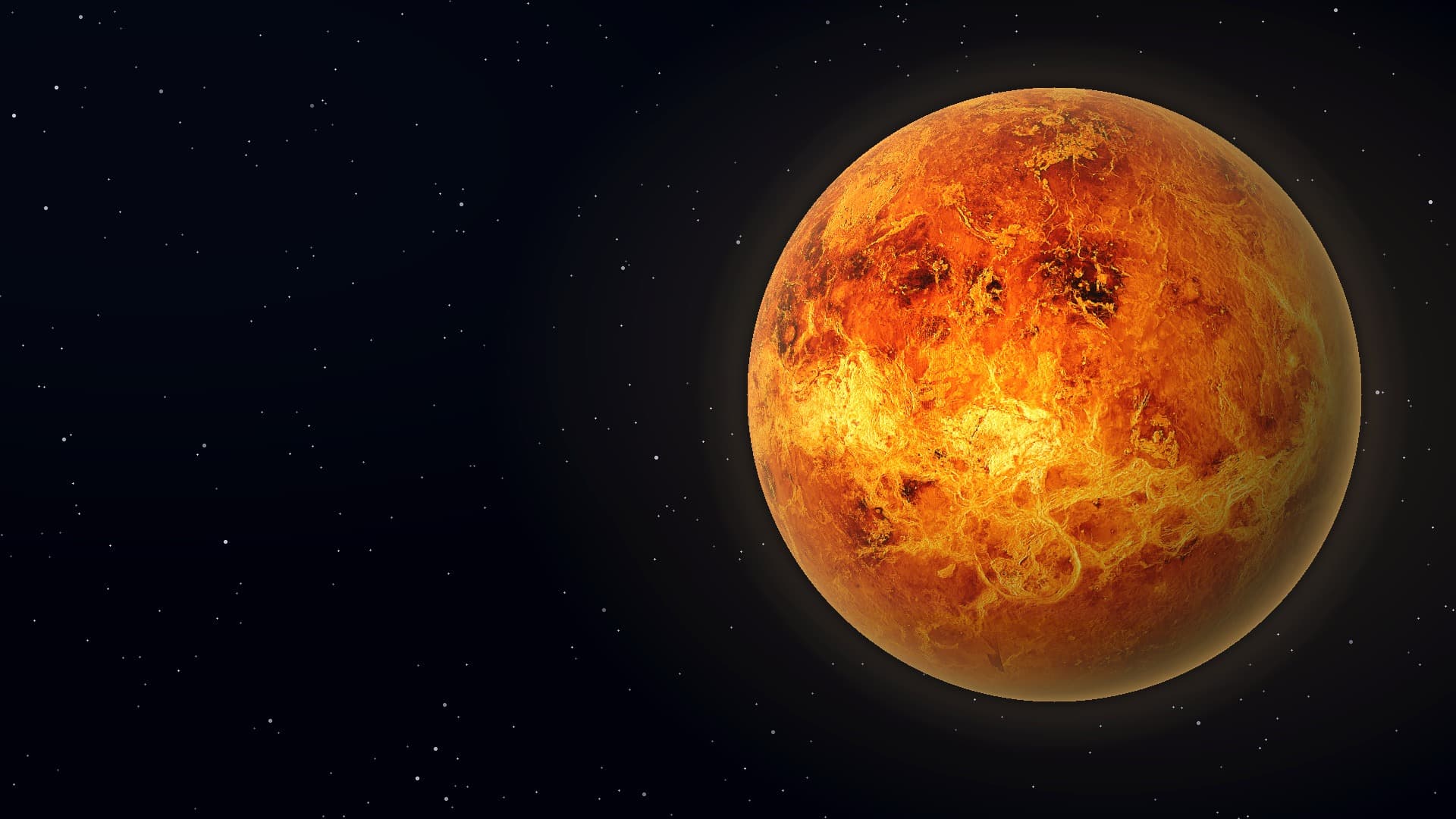
Atmosphere loop
Sulfur Cloud Super-Rotation
A high cloud-deck frame for Akatsuki-era weather motion and ultraviolet contrast.
Approved generated asset seed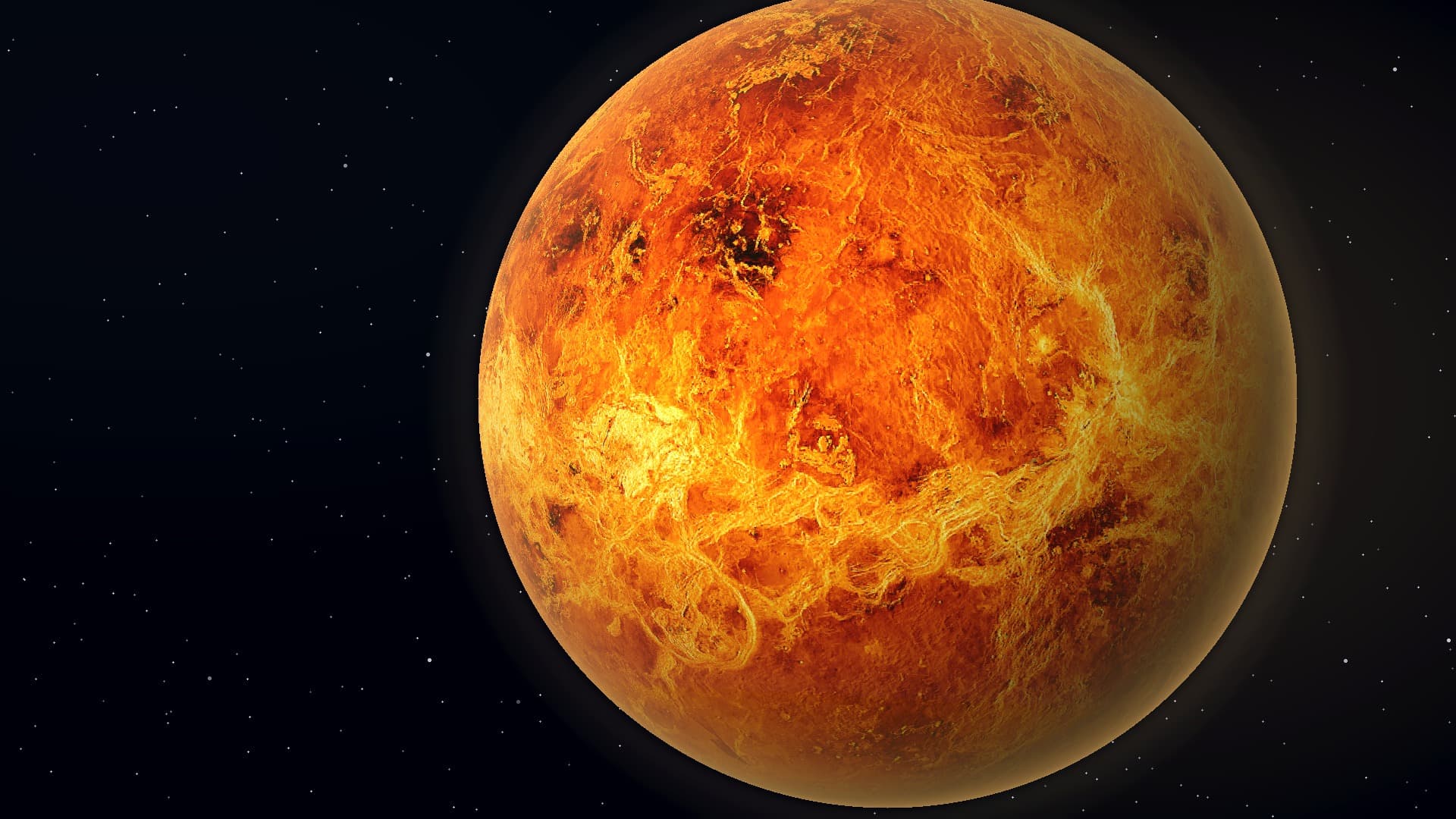
Surface map
Radar Terrain Atlas
Radar relief styling keeps Venus readable without pretending visible cameras see the ground.
Approved generated asset seedSurface concept
Pressure Vessel Horizon
A grounded, hostile surface plate inspired by Venera lander panoramas.
Approved local textureSource families
Editorial anchors for the frame-level source links above.
Studio output
Generated asset vault
Completed Higgsfield generations for Venus now flow back into the planet profile as reusable stills, motion plates and prompt-ready campaign records.
Scale / orbit
Earth reference instruments
Radius, gravity, rotation, and heliocentric placement resolved against Earth and the outer-system range.
Radius comparator
0.9x Earth radius
Earth
1x radius
Venus
0.95x radius
- Reference
- Earth radius
- Scale reading
- 0.95x
- Surface gravity
- 8.9 m/s^2
Orbital placement
0.7 AU from the Sun
- Distance
- 108.2M km
- Solar order
- #2
- AU ratio
- 0.72 AU
Gravity
8.9 m/s^2
Day length
243 Earth days
Atmosphere
Composition and environmental character
Venus is wrapped in dense carbon dioxide with sulfuric acid clouds, making the surface hotter than Mercury and under crushing pressure.
- Pressure
- About 92 Earth atmospheres
- Weather
- Global super-rotating winds above a nearly still surface
Environmental shell
Pressure, weather and shielding layers
Venus is wrapped in dense carbon dioxide with sulfuric acid clouds, making the surface hotter than Mercury and under crushing pressure.
Upper haze
Sulfuric acid aerosols
Bright cloud tops reflect sunlight and hide the surface from visible cameras.
Middle clouds
Fast zonal winds
Atmospheric super-rotation carries cloud features around the planet in days.
Near surface
Carbon dioxide pressure cooker
Heat and pressure create a hostile environment for landers.
Satellite system
Moons, rings and nearby targets
Venus has no confirmed moons, making its absent satellite system part of the larger mystery around its spin history and past orbital encounters.
0 confirmed natural satellites
Venus carries 0 known natural satellites in the core atlas dataset.
No confirmed moons
The absence of a moon system is itself useful context for formation history, tidal interactions and future survey planning.
Science priorities
Why Venus matters
The atlas treats every world as a live research case: geology, climate, interior structure and mission strategy are wired into the profile.
3 focus areas
Runaway greenhouse
About 462 C average
Venus is the solar system's clearest nearby warning about atmospheric feedbacks.
Hidden geology
Radar-first surface map
Volcanic plains, tessera terrain and coronae hint at a planet still reshaping itself.
Cloud chemistry
Sulfur cycle laboratory
The cloud deck links photochemistry, volcanism and atmospheric circulation.
Missions
Venus mission dossier
Venus exploration is a pressure vessel story: radar mapping, descent probes and atmospheric tracking reveal an Earth-sized planet beneath a corrosive cloud deck.
Featured stack
4 dated records connect this planet profile to exploration, observation and archival source links.
1970
highlightedVenera 7
Soviet space program / First soft landing data
Sent the first direct measurements from the surface of another planet.
NASA History Beyond Earth1982
highlightedVenera 13
Soviet space program / Surface images and chemistry
Returned color panoramas and analyzed basaltic surface material.
NASA HEASARC Venera 13 and 141990-1994
highlightedMagellan
NASA / Radar mapper
Mapped most of Venus through the clouds and transformed its geology catalog.
NASA Magellan2015-2025
highlightedAkatsuki
JAXA / Cloud and climate orbiter
Tracked super-rotation, waves and cloud structure before JAXA completed operations on September 18, 2025.
JAXA Akatsuki project