Mars
The red planet, cold, dusty and central to future exploration.
Mars has polar ice caps, ancient river valleys, volcanoes and a thin carbon dioxide atmosphere that hints at a wetter past.
Mars is the atlas field site: orbiters, landers, rovers and sample-caching hardware piece together an ancient wet world now locked in cold desert conditions.
- Orbit
- 1.9 Earth years
- Scale
- 0.5x Earth radius
- Solar distance
- 1.5 AU
- Mission records
- 4 featured
Telemetry
Planet profile
Instrument readouts calibrated against the solar system reference frame.
- Order
- #4
- Channels
- 06
- Sources
- 01
- RadiusRAD-01
- 3.4K km
- 3,390 km
- Distance from SunHEL-02
- 227.9M km
- 1.52x Earth's orbit in the map scale
- Orbital periodORB-03
- 1.9 Earth years
- 687 Earth days
- Day lengthROT-04
- 1 Earth day
- 24.6 hours
- MoonsSAT-05
- 2 known moons
- Confirmed natural satellites
- GravityGRV-06
- 3.7 m/s^2
- Surface or cloud-top gravity
Authored fact sources
Atlas media frame
Rover horizon at Jezero
A reserved frame for rover panoramas, orbital mineral maps and dust-season campaign imagery.
Profile Plate / Mission Control
Media gallery
Curated visual storyboard
Planet-specific frames pair approved imagery with orbital views, science overlays and mission-ready close passes for the generated asset layer.
2026-06-14
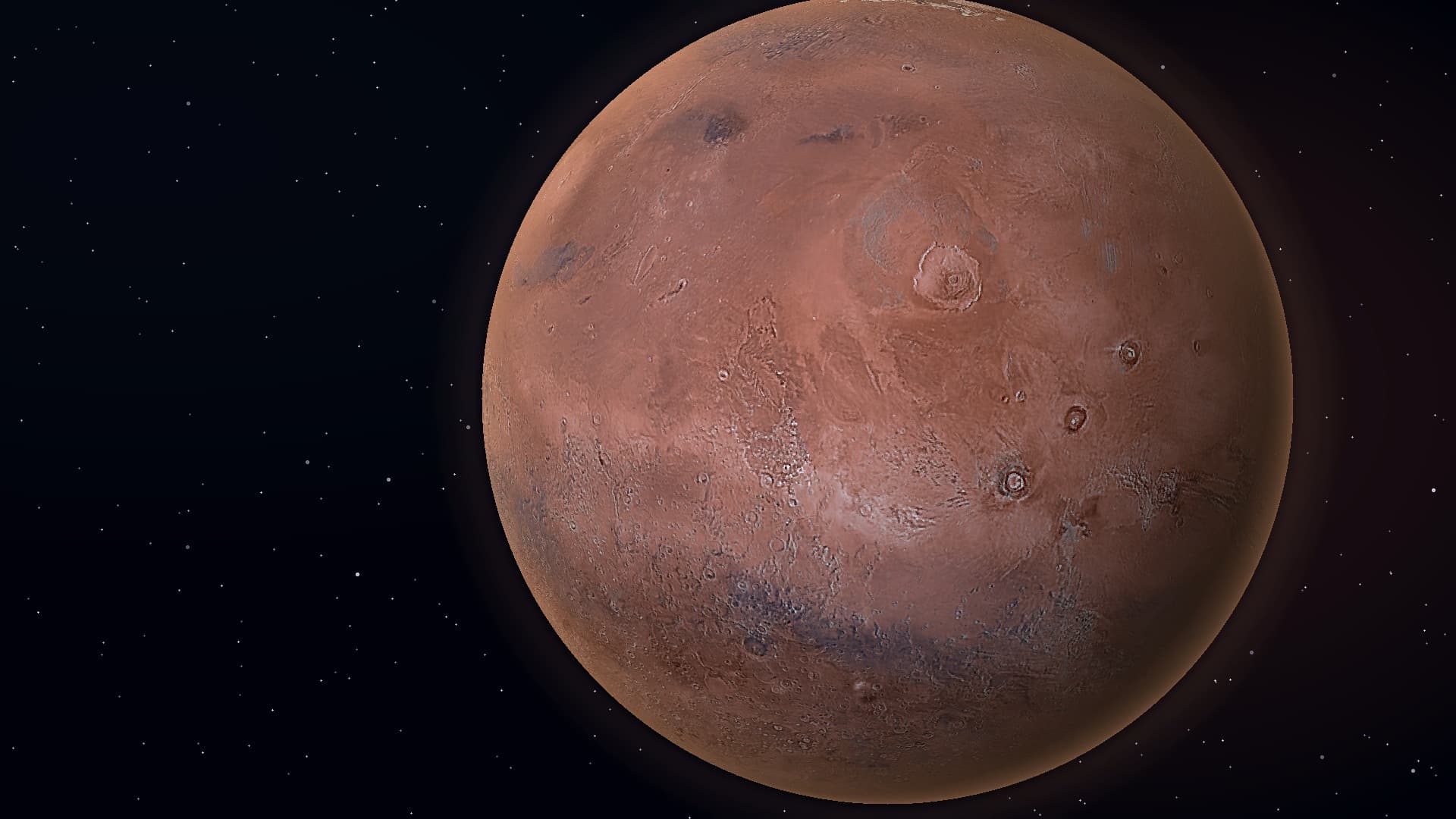
Rover context
Jezero Delta Campaign
Layered sediments and sample-caching routes become the visual spine of the Mars dossier.
Approved generated asset seed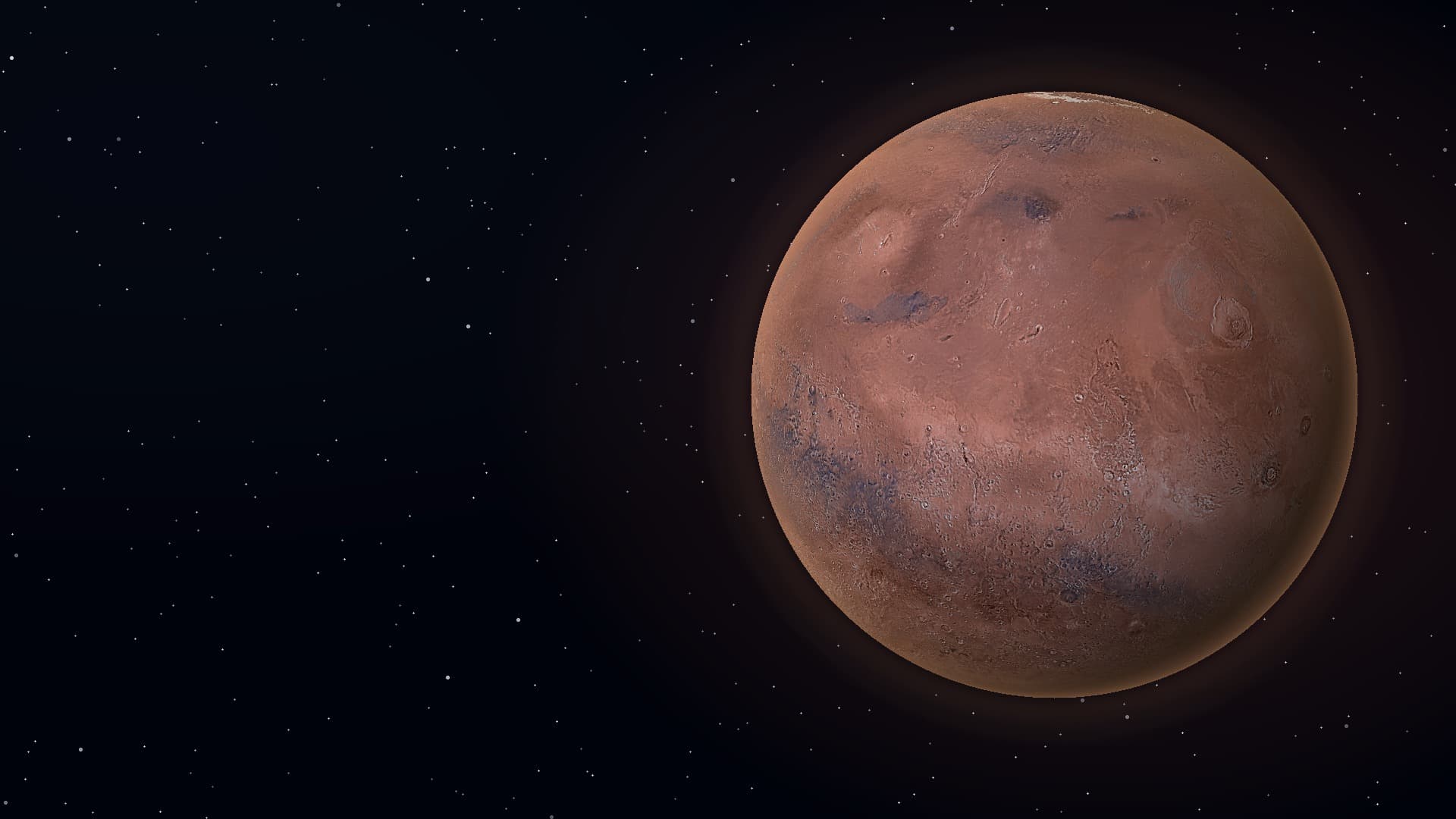
Atmosphere loop
Global Dust Season
A thin-air motion plate for dust lifting, haze and changing solar visibility.
Approved generated asset seedTerrain plate
Canyon Rim Flyover
A cinematic terrain pass for valleys, scarps and volcanic province scale.
Approved local textureSource families
Editorial anchors for the frame-level source links above.
Studio output
Generated asset vault
Completed Higgsfield generations for Mars now flow back into the planet profile as reusable stills, motion plates and prompt-ready campaign records.
Scale / orbit
Earth reference instruments
Radius, gravity, rotation, and heliocentric placement resolved against Earth and the outer-system range.
Radius comparator
0.5x Earth radius
Earth
1x radius
Mars
0.53x radius
- Reference
- Earth radius
- Scale reading
- 0.53x
- Surface gravity
- 3.7 m/s^2
Orbital placement
1.5 AU from the Sun
- Distance
- 227.9M km
- Solar order
- #4
- AU ratio
- 1.52 AU
Gravity
3.7 m/s^2
Day length
1 Earth day
Atmosphere
Composition and environmental character
Mars has a thin carbon dioxide atmosphere that can lift planet-wide dust, sculpt dunes and leave liquid water unstable at the surface.
- Pressure
- Less than 1% of Earth's
- Weather
- Dust devils, seasonal frost and global dust storms
Environmental shell
Pressure, weather and shielding layers
Mars has a thin carbon dioxide atmosphere that can lift planet-wide dust, sculpt dunes and leave liquid water unstable at the surface.
Lower atmosphere
Carbon dioxide with dust
Fine dust controls sky color, heating and solar power conditions.
Polar exchange
Seasonal CO2 frost
Carbon dioxide freezes and sublimates at the poles each Martian year.
Upper escape
Atmosphere slowly leaks away
Solar wind and low gravity help strip gases into space.
Satellite system
Moons, rings and nearby targets
Mars has two small irregular moons that look more like captured rubble than round worlds, and both are key targets for origin studies.
2 confirmed natural satellites
Mars carries 2 known natural satellites in the core atlas dataset.
Phobos
Inner rubble moon
Orbits so close that tidal forces are slowly drawing it inward.
Deimos
Outer small moon
A smoother, more distant moon with a debated capture history.
Science priorities
Why Mars matters
The atlas treats every world as a live research case: geology, climate, interior structure and mission strategy are wired into the profile.
3 focus areas
Ancient water
Deltas, clays and valley networks
Layered sediments preserve evidence for rivers, lakes and changing climate.
Habitability tests
Organic molecules detected
Rovers study whether past environments could have supported microbial life.
Human exploration
In-situ resource target
Ice, atmosphere and dust behavior shape every future crewed architecture.
Missions
Mars mission dossier
Mars is the atlas field site: orbiters, landers, rovers and sample-caching hardware piece together an ancient wet world now locked in cold desert conditions.
Featured stack
4 dated records connect this planet profile to exploration, observation and archival source links.
1965
Mariner 4
NASA / First successful flyby
Returned the first close images and revealed a cratered surface.
NASA Mariner 41976
highlightedViking 1 and 2
NASA / Orbiters and landers
Established the first long-lived surface stations and biology experiments.
NASA Viking project2012 onward
highlightedCuriosity
NASA / Gale crater rover
Found evidence that ancient Mars had habitable lake environments.
NASA Curiosity rover2021 onward
highlightedPerseverance
NASA / Jezero crater rover
Caches rock cores and explores a former river delta.
NASA Perseverance rover