Neptune
A distant blue ice giant with fierce winds and dark storms.
Neptune is the outermost major planet, known for supersonic winds, deep blue clouds and the captured moon Triton.
Neptune is a distant weather machine: one Voyager flyby and ongoing telescope campaigns show supersonic winds, storms and the captured moon Triton.
- Orbit
- 164.8 Earth years
- Scale
- 3.9x Earth radius
- Solar distance
- 30 AU
- Mission records
- 4 featured
Telemetry
Planet profile
Instrument readouts calibrated against the solar system reference frame.
- Order
- #8
- Channels
- 06
- Sources
- 01
- RadiusRAD-01
- 24.6K km
- 24,622 km
- Distance from SunHEL-02
- 4.5B km
- 30.05x Earth's orbit in the map scale
- Orbital periodORB-03
- 164.8 Earth years
- 60,190 Earth days
- Day lengthROT-04
- 16.1 hours
- 16.1 hours
- MoonsSAT-05
- 14 known moons
- Confirmed natural satellites
- GravityGRV-06
- 11.2 m/s^2
- Surface or cloud-top gravity
Authored fact sources
Atlas media frame
Storm watch at the blue frontier
A reserved frame for Voyager mosaics, telescope storm campaigns and Triton flyby concepts.
Profile Plate / Observatory Natural
Media gallery
Curated visual storyboard
Planet-specific frames pair approved imagery with orbital views, science overlays and mission-ready close passes for the generated asset layer.
2026-06-12
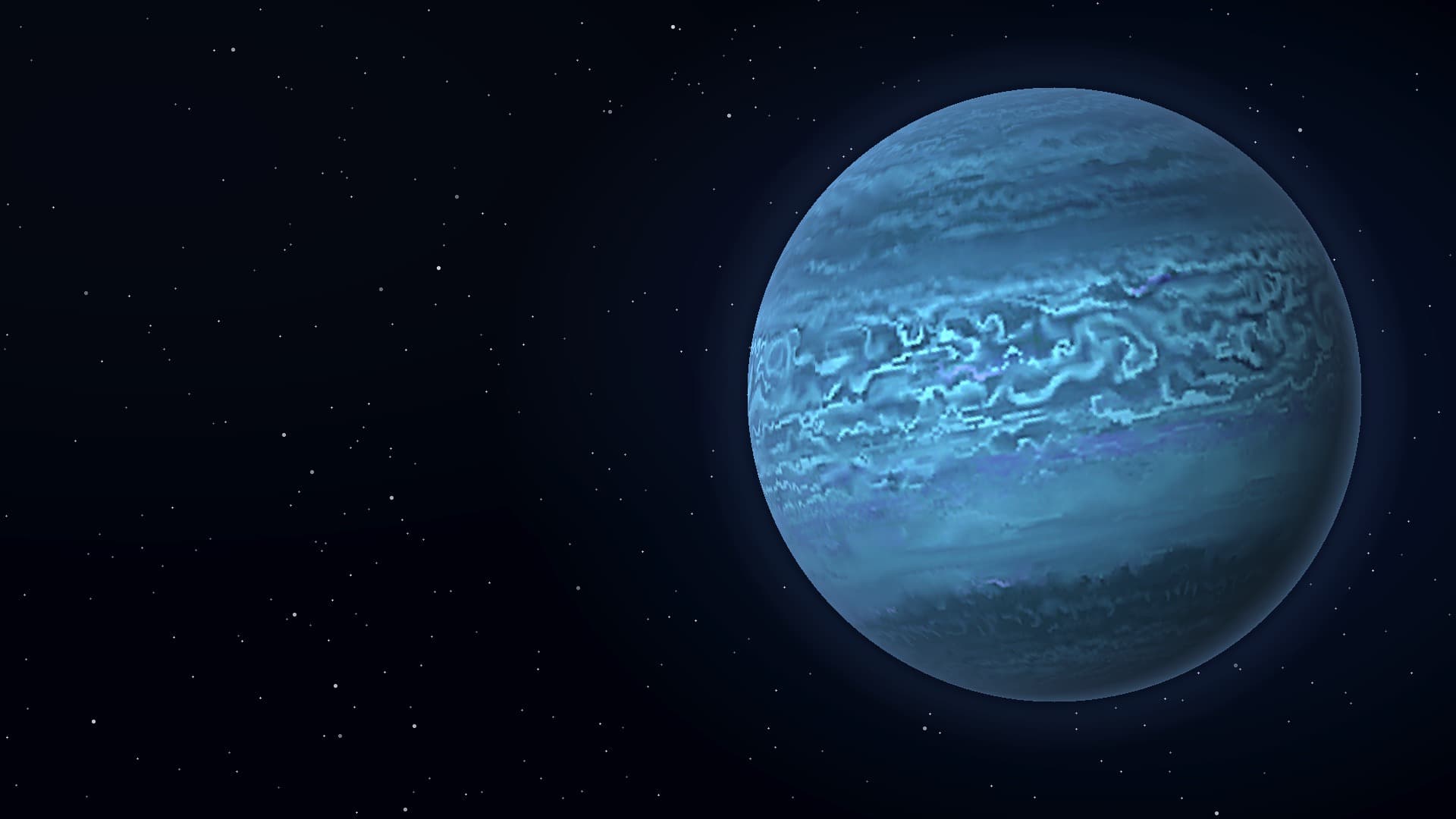
Storm campaign
Dark Vortex Watch
Fast winds and evolving vortices frame Neptune as an active weather machine.
Approved generated asset seed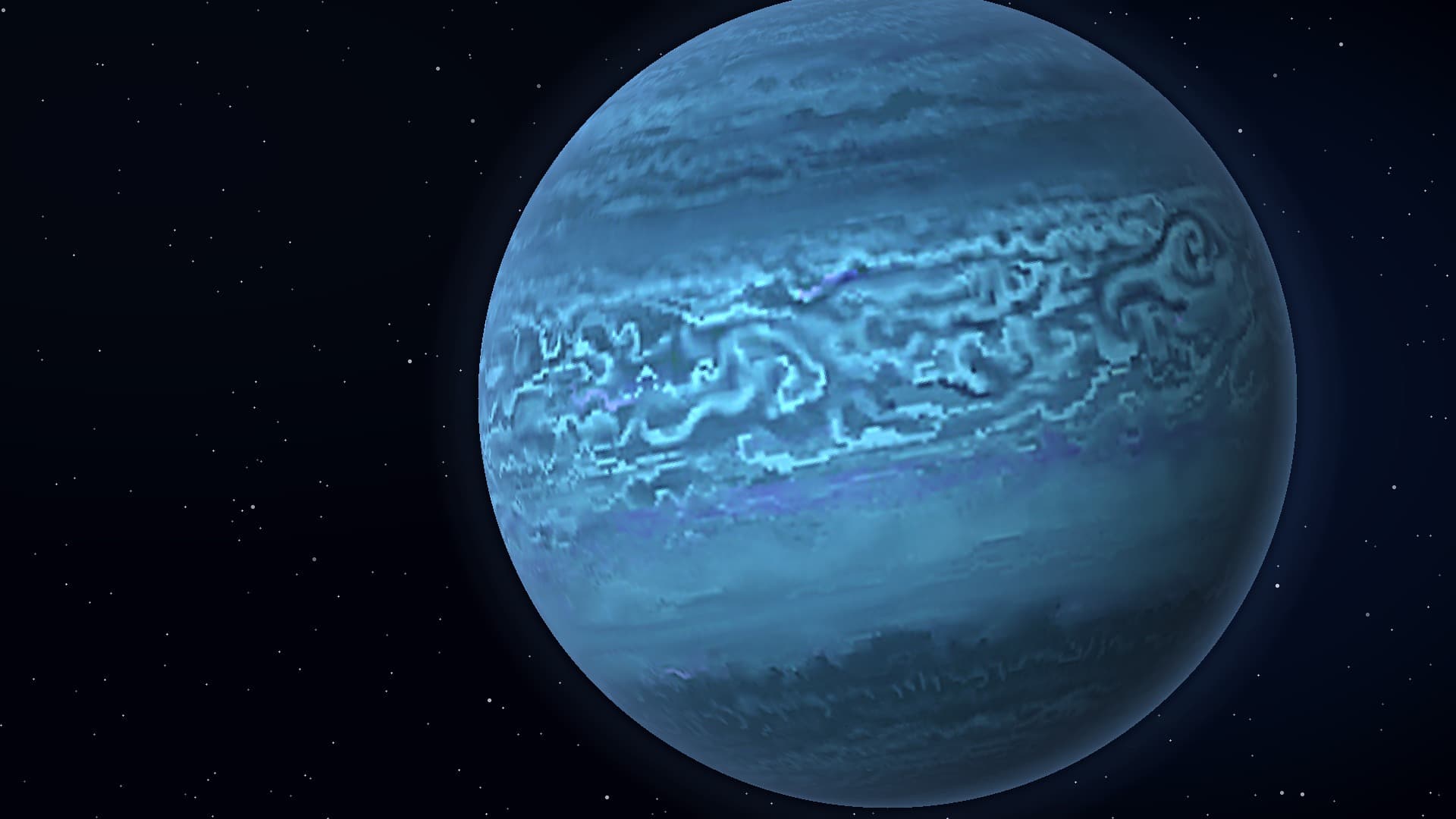
Captured moon
Triton Reconnaissance
Retrograde orbit, nitrogen geysers and possible ocean chemistry anchor a mission plate.
Approved generated asset seedTour transition
Blue Frontier Approach
A distant approach frame gives the guided tour a strong outer-system ending.
Approved local textureSource families
Editorial anchors for the frame-level source links above.
Studio output
Generated asset vault
Completed Higgsfield generations for Neptune now flow back into the planet profile as reusable stills, motion plates and prompt-ready campaign records.
Scale / orbit
Earth reference instruments
Radius, gravity, rotation, and heliocentric placement resolved against Earth and the outer-system range.
Radius comparator
3.9x Earth radius
Earth
1x radius
Neptune
3.86x radius
- Reference
- Earth radius
- Scale reading
- 3.86x
- Surface gravity
- 11.2 m/s^2
Orbital placement
30 AU from the Sun
- Distance
- 4.5B km
- Solar order
- #8
- AU ratio
- 30.05 AU
Gravity
11.2 m/s^2
Day length
16.1 hours
Atmosphere
Composition and environmental character
Neptune's methane-tinted atmosphere receives little sunlight but still produces violent winds, bright methane clouds and migrating dark vortices.
- Pressure
- No true surface
- Weather
- Supersonic winds, methane clouds and dark storms
Environmental shell
Pressure, weather and shielding layers
Neptune's methane-tinted atmosphere receives little sunlight but still produces violent winds, bright methane clouds and migrating dark vortices.
Methane cloud tops
Deep blue absorption
Methane absorbs red light while high clouds trace fast winds.
Dynamic storm layer
Dark vortices and bright companions
Large storms can appear, drift and disappear over years.
Warm interior
Strong internal heat flow
Internal energy helps drive weather despite the planet's distance from the Sun.
Satellite system
Moons, rings and nearby targets
Neptune's moon system is dominated by Triton, a captured Kuiper Belt object orbiting backward and reshaping the system around it.
14 confirmed natural satellites
Neptune carries 14 known natural satellites in the core atlas dataset.
Triton
Captured icy world
Has nitrogen geysers, a retrograde orbit and possible ocean chemistry.
Nereid
Eccentric outer moon
Its stretched orbit records gravitational disruption after Triton's capture.
Proteus
Large irregular moon
A dark, heavily cratered moon just below the size needed to become round.
Science priorities
Why Neptune matters
The atlas treats every world as a live research case: geology, climate, interior structure and mission strategy are wired into the profile.
3 focus areas
Fastest winds
More than 1,500 km/h
Neptune's winds are a key stress test for atmospheric circulation models.
Captured Triton
Retrograde orbit
Triton may preserve chemistry from the Kuiper Belt inside Neptune's system.
Outer system climate
165 Earth-year orbit
Neptune's long seasons help separate solar forcing from internal heat.
Missions
Neptune mission dossier
Neptune is a distant weather machine: one Voyager flyby and ongoing telescope campaigns show supersonic winds, storms and the captured moon Triton.
Featured stack
4 dated records connect this planet profile to exploration, observation and archival source links.
1846
Mathematical discovery
Le Verrier, Adams and Galle / Predicted planet
Neptune was found after its gravity disturbed Uranus from expected motion.
NASA History Neptune discovery1989
highlightedVoyager 2
NASA / Only spacecraft flyby
Imaged dark storms, rings, Triton and the fastest winds then known.
NASA Voyager 21990s onward
Hubble and adaptive optics
International observatories / Storm monitoring
Track bright clouds, dark vortices and seasonal changes from Earth orbit and ground telescopes.
NASA Hubble OPALFuture
Triton flyby concepts
Concept studies / Ocean world reconnaissance
Would target Triton's geology, thin atmosphere and possible subsurface ocean.
NASA/JPL Trident proposal